A global tragedy, boxed.
Rock Box: A Global Tragedy
You ever see a video where they lower a soda can into the ocean and pressure crushes it? Did you ever wonder, "what shape should the can be so it survives longer?" If so, I hope you found your calling as an engineer, or at least had a good shower.
Ships from San Jose, California. Postage is added at checkout: $12 USPS Ground Advantage, $18 Priority Mail, free Ground Advantage over $150.
- Size
- 4 x 4 x 1 inches
- Family
- fossil, onyx and quartz
The listing
The answer? A spiral. If we made soda cans in the shape of ammonite spiral, they'd be able to reach new oceanic depths. Absolute nightmare to drink from, though.
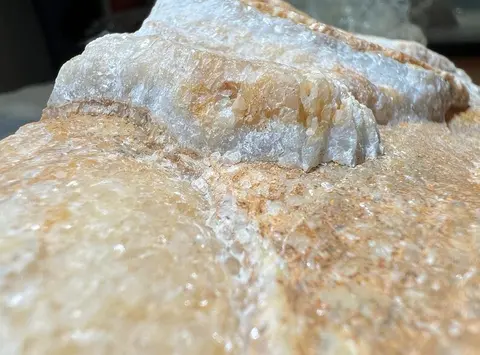
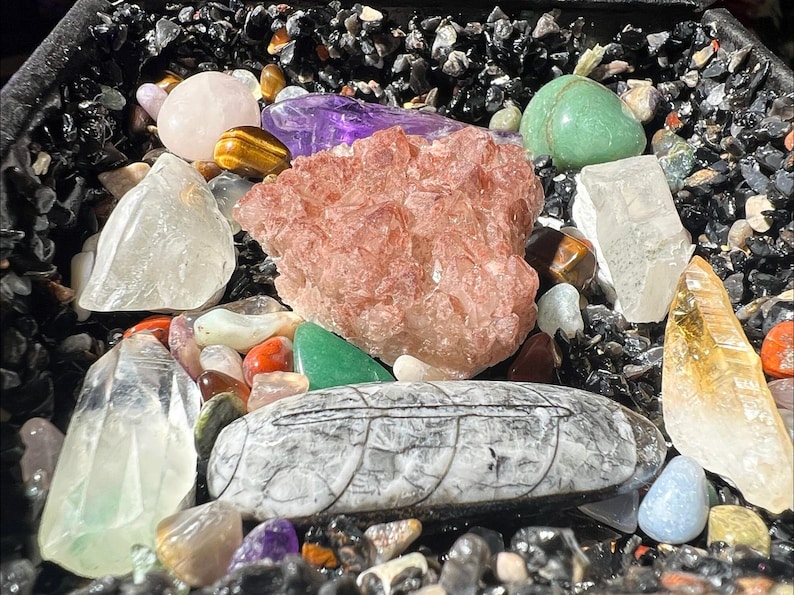
Front center you have an orthoclopterus fossil, an ancient relative of the squid who liked to stay on the straight and narrow. That straight and narrow shell design looked impressive at first, but much like the modern soda can, it was easily crushed. Maybe by water, maybe by some predator who would have likened it to a crunchy slim jim.
Perhaps their biggest mistake was not a lifestyle choice, but instead was to have existed before trees, 400 million years ago. The first land plants were just revving up their chlorophyll at the time, and that meant more nutritious soil. More nutritious soil gets washed down rivers and into oceans, where it creates more nutritious water. More nutritious water creates algae blooms.
Algae was one of the first oxygen-eating organisms, and it's been around for a few extinctions. Probably helped push some of them along. With all that plant nutrient run-off, algae needed to wash down the good eats with some extra oxygen, which may have suffocated a large percentage of marine life, including our orthoscopic friends.
That's just one theory. Regardless, the once abundant orthoclerosis went extinct, leaving behind no kin nor will. The ammonites kept the family name going for a while, with their improved spiral design that was very difficult for predators to drink from, but they threw in the towel with the dinosaurs. Today, the closest living relative is the nautilus, a creature which I cannot picture in my head no matter how many times I look it up.
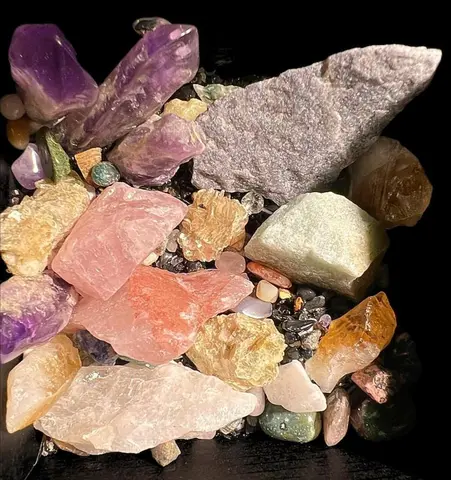
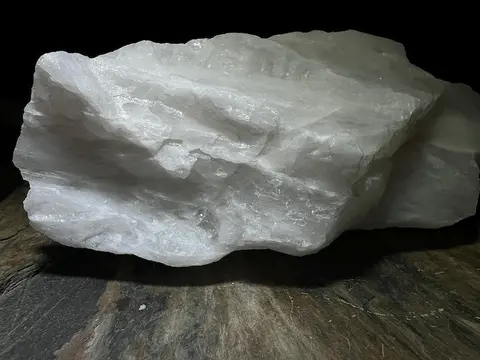
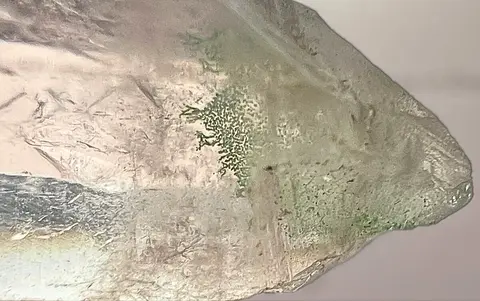
This box contains one remanent of a global tragedy, a chunk of lithium quartz, mid-grade prasiolite, clear-to-milky quartz point that's seen better days, a beautiful amethyst stick, polished rose quartz, aventurine, citrine point, and a fuchsite quartz point - which is a very cool rock that deserves far more appreciation than it gets.
Also a random mix of of tumbles and chips, those shown in the photos as well as some extras. Oh, and a surprise, which is not a rock, but I hope you enjoy it.
If you'd like science info cards that take science more seriously than this listing, let me know in messages. If you prefer the metaphysical take, rest assured someone more fit for the job than I will write those for you.
Rocks sturdy and ship as is, fixed with GeoTac. To remove, pull up gently while twisting back and forth.